Table Of Content
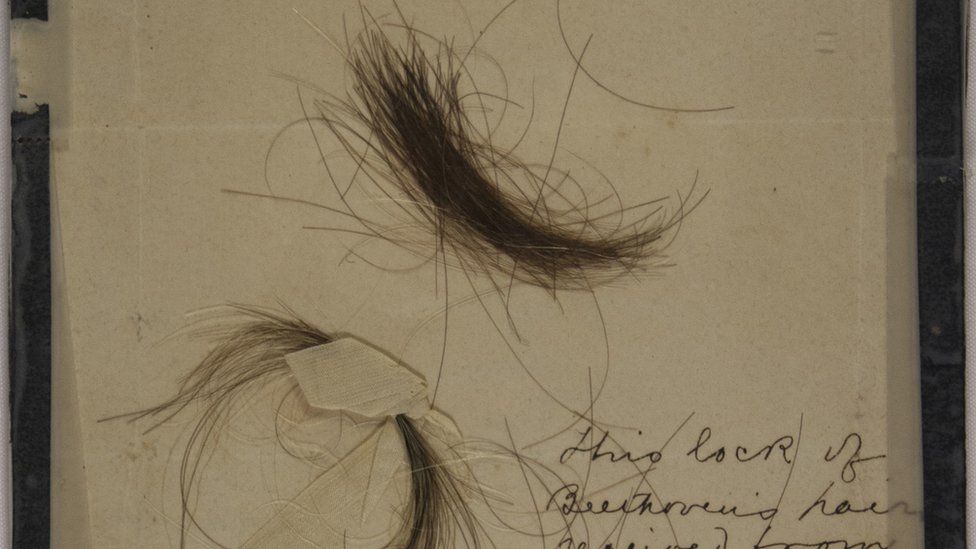
It was a tragic irony Beethoven wished the world understood, not just from a personal perspective, but a medical one. One stormy Monday in March, 1827, the German composer Ludwig von Beethoven passed away after a protracted illness. Bedridden since the previous Christmas, he was attacked by jaundice, his limbs and abdomen swollen, each breath a struggle. Ever since, a cottage industry has aimed to understand Beethoven’s illnesses and the cause of his death. Within three days of Beethoven’s death, not a single strand of hair was left on his head. Lead is poisonous to many tissues and enzymes in the body, and can enter the body by ingestion or inhalation.
DNA From Beethoven’s Hair Unlocks Medical and Family Secrets
He gave anguished thought to these afflictions, especially his hearing loss, and hoped they would one day be understood and the explanation made public. Ludwig van Beethoven’s life was not quite as short; he was 56 when he died in 1827. Yet it was short enough to tantalise us as to what more he might have achieved, had he had better health. “We use this as an example to illustrate broader challenges of individual-level genetic predictions,” the authors wrote in the study. Usually, old bones serve as the basis for analysis, but that was not possible with Beethoven. "You could have exhumed Beethoven to perform such a genetic analysis with his bones," Krause says.
More Stories from Science News on Genetics
In 1928, a testimonial concert honoring Clark had raised money for a memorial, and in 1932 plans were started for the commissioning of a statue of Clark's favorite composer, Beethoven. The Philharmonic would use the testimonial concert funds to make the statue and then donate it to the city, so that it could sit in Pershing Square, eternally staring at the Philharmonic Auditorium, imposingly standing directly across. Seven feet and ten tons of bronze, he is walking with his hands clasped behind his back, his vest unbuttoned, a look of intense concentration on his face. He, along with these other forgotten statues, was once in a place of great honor, back when Los Angeles was trying admirably to become the city it thought it needed to be. “The procurement of the sample material alone is admirable,” says Christian Reiter, a forensic medical specialist at the Medical University of Vienna who authenticated a portion of Beethoven’s skull in 2022. Beethoven’s lock of hair was presented to Maria and it stayed in her and Halm’s family for years, before being handed down to one of Halm’s pupils.
About the study
Future study of Beethoven’s DNA may also answer historical questions about Beethoven’s ethnicity; as a young man, Beethoven was sometimes called “the Moor” because of his dark skin, and some historians wonder if he had some African blood. His hair didn’t show any of the wrinkles or bends typical of people of African descent, but the jury’s still out on that question. One ailment of Beethoven’s that probably can’t be pinned on lead poisoning is his deafness. However, DNA analysis of the hair has already defined a significant portion of Beethoven’s genetic make-up, and as our understanding of the human genetic code grows, we may be able to find clues to his deafness within his DNA.
You’re gonna need a bigger number: Scientists consider a Category 6 for mega-hurricane era
Parson says that now that Beethoven’s genetic information is publicly available, it will probably spur amateur sleuths to investigate further and explore how they might be related to the renowned composer. “Like all good stories, it leaves us with as many questions as answers,” he says. If you're enjoying this article, consider supporting our award-winning journalism by subscribing. By purchasing a subscription you are helping to ensure the future of impactful stories about the discoveries and ideas shaping our world today. In the sale, which took place yesterday on Tuesday 11 June, the preserved lock reached over double that estimate when the hammer slammed down on a £35,000 final bid. A lock of Beethoven’s hair has been sold at Sotheby’s in London, fetching a massive £35,000.
Beethoven's cause of death revealed through DNA analysis of his hair
The team ended up ruling out three locks of hair previously ascribed to Beethoven as not his, including the "Hiller lock," which was found to be from a woman. That lock was linked to lead poisoning, which can now no longer be attributed to Beethoven's health demise. Similarly, the team couldn’t find a genetic explanation for Beethoven's gastrointestinal issues, but did note that his genetics showed that both coeliac disease and lactose intolerance were highly unlikely. He also had a "certain degree of genetic protection against risk of irritable bowel syndrome," which has often been blamed for his complaints. Now, scientists have taken the closest look yet at the composer’s health by analyzing DNA extracted from preserved locks of his hair, according to a new study published Wednesday in the journal Current Biology.
DNA can reveal lies and secrets
It took eight years until the results of the international research team could now be published in the scientific journal Current Biology. Those common features — along with a clear record of who owned these separate locks of hair over the centuries — makes Begg “extremely confident” that these locks are Beethoven’s. Begg partnered with Beethoven enthusiasts to ask the owners of these locks to part with a few strands. The team was able to gather samples from eight locks said to have been snipped from 1821 to 1827. DNA from strands of Beethoven’s hair is helping to uncover what may have caused his death, researchers say.
It was Beethoven’s grandfather who had first settled in Bonn when he became a singer in the choir of the archbishop-elector of Cologne; he eventually rose to become Kappellmeister. His son Johann was also a singer in the electoral choir; thus, like most 18th-century musicians, Beethoven was born into the profession. Though at first quite prosperous, the Beethoven family became steadily poorer with the death of his grandfather in 1773 and the decline of his father into alcoholism. By age 11 Beethoven had to leave school; at 18 he was the breadwinner of the family. Of the eight locks of hair analyzed, seven yielded enough DNA for interpretation. A DNA analysis also was performed and has defined a significant portion of Beethoven's genetic make-up.
DNA testing shows hair that sold for thousands isn't Beethoven's - Business Insider
DNA testing shows hair that sold for thousands isn't Beethoven's.
Posted: Sun, 26 Mar 2023 07:00:00 GMT [source]
What we learnt about Beethoven’s health
And it may be a difficult one to figure out, because genetics can only show us half of the “nature and nurture” equation that makes up our health. Now, with advances in ancient DNA technology, researchers have been able to pull genetic clues from locks of Beethoven’s hair that had been snipped off and preserved as keepsakes. They focused on five locks that are “almost certainly authentic,” coming from the same European male, according to the study.
Then, they performed shallow shotgun sequencing to permit assessments of deoxyribonucleic acid (DNA) preservation and authenticity. In addition, they performed relatedness testing of his autosomal and X chromosome DNA. What’s more, alcohol consumption may have exacerbated Beethoven’s liver disease risk. There has been controversy regarding the extent and nature of his alcohol consumption, which is referred to – but not quantified – in surviving records.
Beethoven's Skull Fragments Return to Vienna - Ludwig Van
Beethoven's Skull Fragments Return to Vienna.
Posted: Mon, 24 Jul 2023 07:00:00 GMT [source]
On a European sojourn one columnist noticed that statues on the continent were protected by spikey needles, making him think "this is what we should have done many years ago for poor Beethoven in Pershing Square." The Pershing Square of the 1930s was very different than the place we experience today. Leafy and green, with a large fountain, shaded paths and old men on benches, it was a park you would expect to see in any of the big cities back east. In the evenings, a well-heeled tourist could stroll from the ritzy Biltmore Hotel through the park to catch a show at the Los Angeles Philharmonic, which had called the old Clune's Auditorium on Fifth and Olive home since the 1920 season.

Lead poisoning initially may cause no symptoms; over time, however, damage to the nerves may result in pain, numbness or tingling of the extremities and muscular weakness. Other symptoms include anemia, headache, abdominal pain, memory loss, unsteady gait and kidney damage. Beethoven’s health was normal as a child; his symptoms didn’t appear until his 20s. The eight hair strands studied showed an average concentration of lead of 60 parts per million. A recent study at the Pfeiffer Treatment Center in Naperville, Illinois, of 6,205 patients found only 11 with levels above 60 ppm, many of whom reported abdominal distress, irritability and depression–just like Beethoven.
"Everything about this project has been fascinating," said Walsh, who worked with McCrone Research Institute, Chicago, and the APS on the analysis. "You can learn a great deal about a person from hair analysis and the labs at McCrone and Argonne used the most sophisticated technology available in the world today for this project." Since he died in 1827 at age 57, there has been much speculation but no proof as to the cause of Beethoven's illnesses and death. Comparing the DNA of the "Beethovens" living in Belgium today, they found that they were related to each other, but there was no DNA from the composer. "We were surprised by this family secret, which shows that Beethoven was not genetically descended from the Flemish Beethoven line, but we don't know which generation is responsible," Begg explains in a separate YouTube video.
In 2014, Begg and his colleagues decided to reconstruct Beethoven’s genetic instruction book, or genome. Luckily, around 30 separate locks of hair attributed to Beethoven had survived, in the possession of collectors and the descendants of people who first received the hair in the 19th century. It’s well-known that Beethoven’s storied career was cut short by progressive hearing loss that left the composer completely deaf by age 45.


No comments:
Post a Comment